 en
en
 nl
nl
 de
de
 fr
fr
 es
es
 cz
cz
 sv
sv
 pl
pl
 ro
ro
 sk
sk
 it
it
 pt
pt
Three things to consider when planning your design
- Choosing the right position in the room
- Recess dimensions and installation space
- Power supply
A fireplace brings atmosphere, warmth and a sense of calm to any interior. While gas and wood-burning fires were once the default choice, more and more homeowners are now opting for a built-in electric fireplace. Not only for sustainability reasons, but also because installation is far more straightforward.
For a sleek, integrated look, many people choose to build their electric fire into a bespoke wall unit or media wall. This way, the fireplace becomes a seamless part of the interior rather than a standalone feature.
That said, there are a number of things worth thinking through before you start. From choosing the right position in the room to understanding the flare effect and installation requirements: good preparation is what separates a nice addition from a genuine focal point.
A built-in electric fireplace offers several practical advantages, particularly in modern homes.
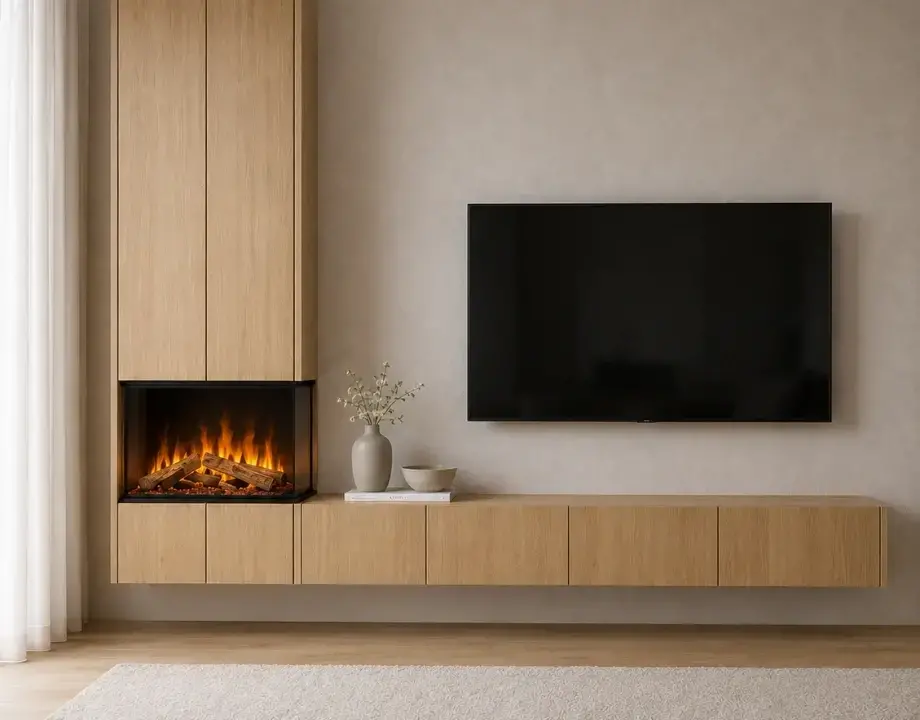
Although an electric fire is easier to install than a gas or wood-burning fireplace, there are a few practical points worth thinking through before you begin. The position of the fire in the room, the available recess space and the quality of the flame effect all play a role.
Addressing these early in the design process ensures the fireplace becomes a genuine focal point rather than an afterthought.
Where you place a built-in electric fire has a significant effect on how the room feels. In most homes, the fireplace sits on the main sightline, typically facing the seating area. It is also common to combine an electric fire for a media wall with a television in a single wall unit. When doing so, proportions matter: the fire should sit at a comfortable viewing height, not too high up the wall.
Built-in electric fires generally have a relatively shallow installation depth, but adequate space is still needed for fitting and ventilation. If you are planning a bespoke unit or a media wall fireplace, it is important to factor in the exact dimensions of the fire early in the design stage.
An electric fire runs on mains electricity, so a nearby power socket is essential. In most cases, a single socket is sufficient for both the flame effect and the heating function.
Anyone comparing electric fires will quickly notice that the quality of the flame effect varies considerably. On more basic models, the visual effect can look flat or artificial, whereas higher-end fires produce a far more realistic and composed flame picture.
Several elements contribute to this. A well-designed ember bed adds depth to the firebox, while realistic log details give a more natural appearance. The ability to adjust flame height, speed and light intensity also makes a real difference, allowing you to tailor the ambience to the time of day or the mood you want to create.
Some electric fires use water vapour to generate the flame effect. While this can be visually striking, many people find it looks less natural in practice. A well-executed light and glow system tends to produce a calmer, more convincing result.
If you are considering a built-in electric fire, it is well worth seeing different models in person. The flame effect ultimately determines how convincing and atmospheric the fireplace feels in your home.
An electric fire can be integrated into an interior in several ways. The right solution depends on the room, the wall design and the look you want to achieve.
This is the most common configuration. The fire sits within a wall or unit and is visible from the front only. It is a popular choice for a media wall and creates a clean, symmetrical appearance.
With a corner fire, the flames are visible from two sides. This adds depth to the interior and means the fireplace remains a feature from multiple positions within the room.
A three-sided fire is open on three sides, creating an open and luxurious feel. This configuration is often found in contemporary interiors where the fireplace plays a central role in the overall design.
Certain mistakes come up time and again when designing a fireplace wall. Being aware of them in advance can make all the difference between an average result and a truly striking feature.
When a fire is placed directly beneath a television, it can end up sitting too high in the wall. This reduces the visibility of the flame effect from the seating area.
A fire that is too small or too large relative to the wall can throw the whole design off balance. The right relationship between the fire, the television and the surrounding joinery is essential.
Electric fires vary widely in quality. The flame effect, the finish and the materials used all differ significantly between models, and these differences are most apparent when you see the fires side by side in person.
If you are considering a built-in electric fire, it is worth exploring the full range of options. Configuration and size matter, but the flame effect and finish are often where the most significant differences lie. Seeing the fires in person quickly makes clear which solution best suits your interior and the atmosphere you have in mind. Feel free to get in touch to find out where you can view our electric fires.